

Liposuction
Liposuction
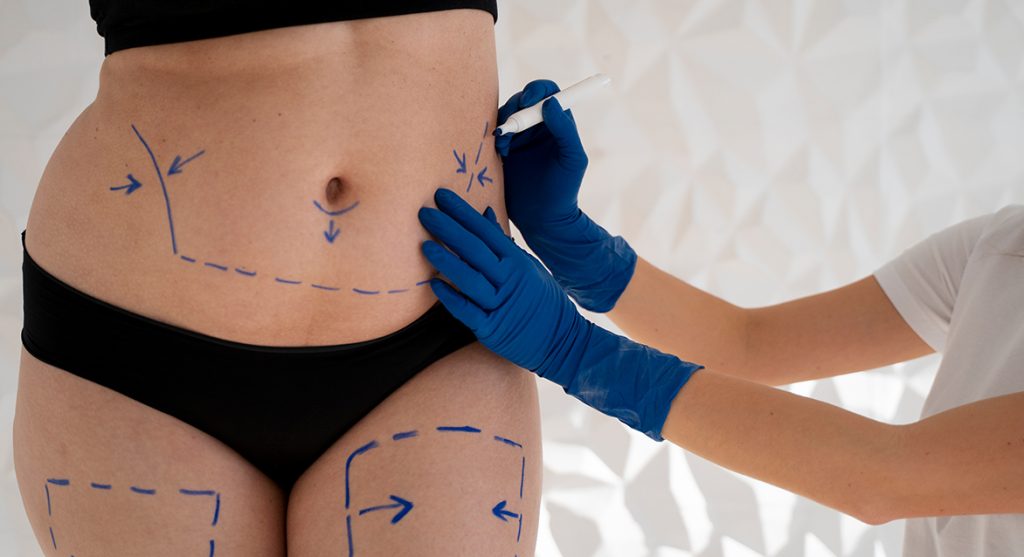
What is Liposuction?Liposuction is a surgical procedure in which excess fat deposits in specific areas of the body are removed using a specialized vacuum or syringes. It is strictly a body contouring procedure, not a weight-loss surgery. Through this operation, diet- and exercise-resistant fat tissue is permanently removed, effectively reducing the total number of existing fat cells in the targeted areas.
Who is a Good Candidate for Liposuction? Maintaining a proper diet, regular exercise, and a healthy lifestyle are essential for weight loss. However, even individuals who strictly follow these habits may still struggle with stubborn (static) localized fat. Areas typically located in the center of the body—such as the abdomen, waist, hips, outer thighs (saddlebags), inner thighs, and knees—are particularly resistant to diet and exercise.
While diet and exercise can partially reduce fat in these areas, pushing the limits further often results in disrupting the body’s overall metabolic balance rather than achieving the desired localized thinning. The most effective method for eliminating fat in these specific regions is liposuction.
Which Areas Can Be Treated with Liposuction? Thanks to modern techniques, it is now possible to safely vacuum fat deposits from numerous body areas, including under the chin, cheeks, neck, upper inner arms, breasts, chest, abdomen, waist, hips, outer and inner thighs, inner knees, calves, and ankles. Additionally, liposuction is frequently performed as a complementary procedure during other body contouring surgeries (such as tummy tucks or breast reductions).
What Are the Methods of Liposuction? In recent years, the use of ultrasound (Vaser Liposuction) and laser (Laser Liposuction) energies has become highly popular. In these advanced methods, excess fat tissues are first broken down by ultrasound waves or laser beams and then removed via vacuum. Compared to conventional (classic) liposuction, these modern techniques offer lower complication rates—such as reduced pain, bleeding, and tissue damage, as well as a lower risk of skin contour irregularities (rippling)—while also promoting better skin tightening post-surgery.
How Long Does Liposuction Surgery Take? The surgery is performed under sterile hospital conditions in an operating room, supervised by an anesthesiologist. General anesthesia is preferred when multiple areas are being treated, whereas local anesthesia may be sufficient for very small, localized areas. The operation generally takes between 1 to 5 hours, depending on the number and size of the areas being treated.
Cannula entry points are closed with dissolvable stitches, meaning there is no need for prolonged dressing changes or stitch removal. In some cases, thin temporary tubes (drains) are placed through the cannula incisions to prevent blood and serum accumulation; these are usually removed after 24 hours. Depending on the extent of the surgery, patients may be discharged on the same day or after a 24-hour hospital stay.
What Should I Expect During Recovery? The recovery period is generally comfortable. Pain is minimal and easily managed with prescribed medications. After the surgery, you will be fitted with a special compression garment, which you will need to wear for 1 to 3 months. This garment helps reduce bleeding and fluid accumulation while supporting body contouring and skin tightening. You may experience some swelling (edema), bruising, tingling, or a burning sensation in the treated areas; these symptoms typically resolve on their own within 1 to 2 weeks. The tiny cannula incision marks will fade and become virtually unnoticeable within 2 to 6 months.
Will There Be Scars After Liposuction? The cannula entry incisions are very small, usually only 2 to 4 mm in diameter, and are carefully closed with fine stitches. The resulting scars are incredibly faint and easily overlooked.
Are Liposuction Results Permanent? Yes, liposuction offers permanent results. The removed fat cells do not grow back. However, patients must be careful to maintain a stable weight and avoid significant weight gain to preserve their new contours.
How Many Liters of Fat Can Be Removed in One Session? Can the Procedure Be Repeated? To ensure patient safety and avoid disrupting the body’s natural balance and functions, a maximum of 4 to 5 liters of fat can be safely removed in a single session. If the fat accumulation areas are extensive, liposuction can be safely repeated after a waiting period of 3 to 6 months.